READY TO GET STARTED?
USEFUL LINKS

We respond to text! Message and data rates may apply. Reply STOP to opt out.
RECEIVE OUR NEWSLETTER
GET SOCIAL

News
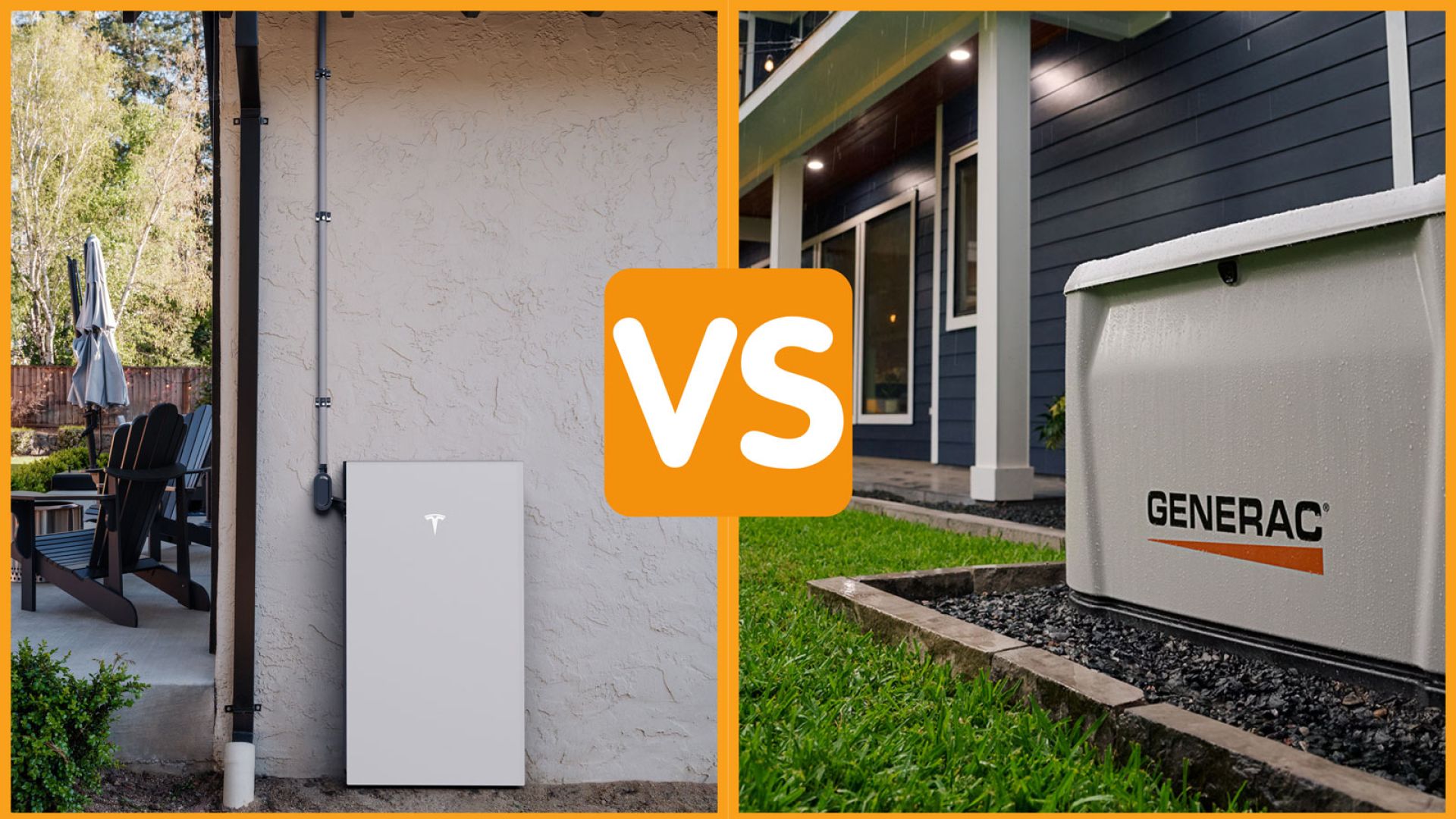
No matter who you are, having a reliable backup energy source can make all the difference to your peace of mind. Whether it's a severe storm, rising energy costs, or an unexpected outage, more homeowners are exploring ways to keep their homes powered when they need it most.
For decades, fuel-powered generators have been a common solution for backup electricity. However, as battery storage technology continues to evolve, homeowners now have more options when it comes to protecting their homes and managing their energy needs.
While generators may offer a lower upfront price, the true cost of backup power goes beyond the initial investment. Fuel expenses, ongoing maintenance, environmental impacts, and even long-term health considerations all play a role in determining which solution makes the most sense.
So, how do generators and home battery storage systems really compare?
One of the biggest considerations for homeowners choosing backup power is cost. Traditional generators, particularly portable models, generally have a lower upfront purchase price than home battery storage systems. Whole-home standby generators, however, can require a more substantial investment when installation, electrical work, and fuel connections are included.
Battery storage systems typically involve a higher initial investment, but their ongoing operating costs can be lower, particularly when paired with solar energy. Plus, battery storage systems have a much longer warranty compared to portable or standby generators.
It's also important to consider that battery storage can provide everyday value beyond outages, depending on local electricity rates, utility programs, and system configuration.
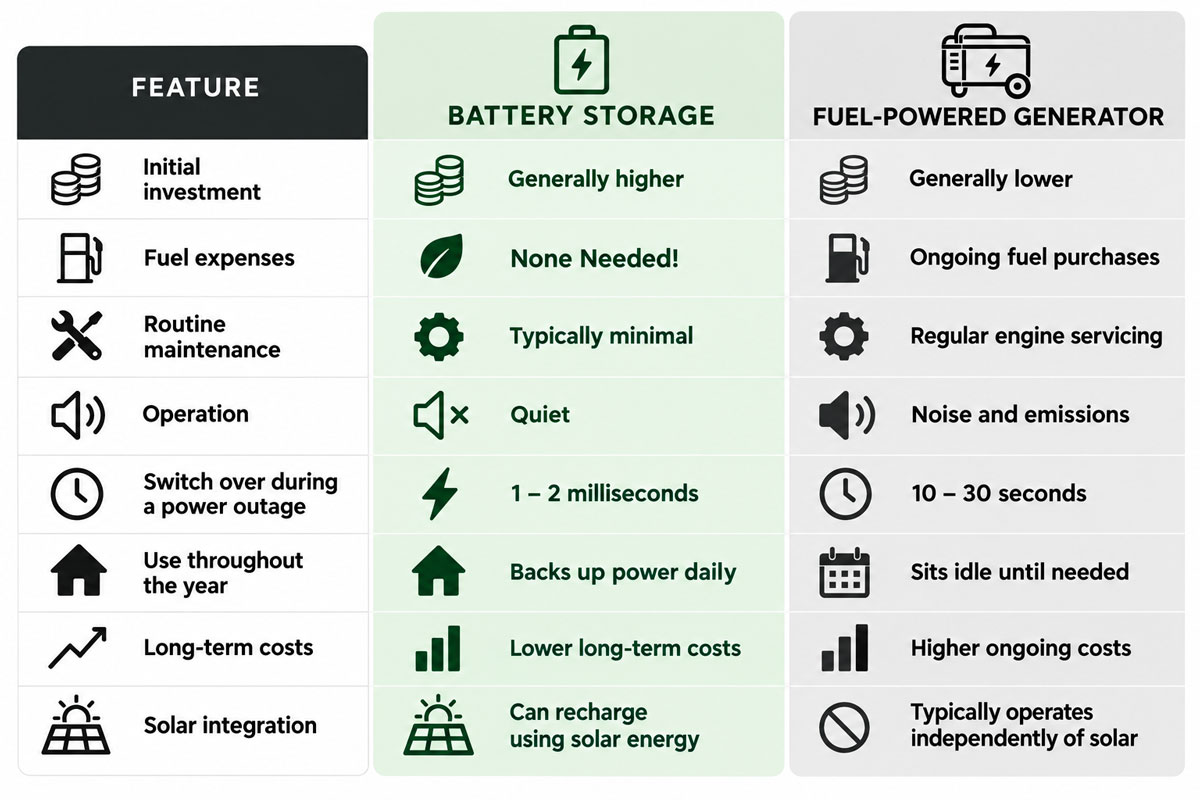
One often-overlooked expense of owning a generator is the cost of keeping it running.
Generators rely on fuel sources such as gasoline, diesel, propane, or natural gas. Although these fuels are widely available, their prices can fluctuate due to supply disruptions, seasonal demand, transportation costs, and broader economic conditions.
During extended outages, a generator may need to run for hours or even days, consuming fuel continuously. That can become expensive, especially when severe weather creates additional demand or makes fuel deliveries difficult.
Battery storage offers a different approach.
Rather than relying on fuel deliveries, batteries store electricity that can be used when the grid goes down. When paired with a properly configured solar energy system, batteries can also recharge during daylight hours, helping extend backup capabilities during prolonged outages.
The key difference: A generator must continue consuming fuel to produce electricity, while a battery uses stored electricity and can be recharged from the grid or compatible solar panels.
Of course, battery backup duration depends on battery capacity, household energy consumption, weather conditions, and available solar production.
Both generators and battery storage systems can provide valuable protection during outages, but they operate differently.
Generators can deliver substantial backup power for extended periods as long as fuel remains available and the equipment operates properly. This makes them a practical solution for certain high-demand applications.
Battery storage systems offer automatic backup capabilities when installed with compatible equipment, often switching over quickly when grid power is lost. For those who already have a standby generator and are looking for additional back-up without relying on fuel, most battery backup systems have the option for AC/DC coupling.
When paired with solar, batteries provide another advantage: the opportunity to generate and store electricity at home rather than depending entirely on outside fuel supplies.
For homeowners concerned about increasingly unpredictable weather, grid reliability, and rising energy expenses, solar and battery storage can provide greater control over how electricity is generated, stored, and used.
It's worth remembering that batteries have finite storage capacity, and solar production can be reduced during cloudy weather or when panels are covered by snow or ice. Proper system sizing and thoughtful energy management are essential.
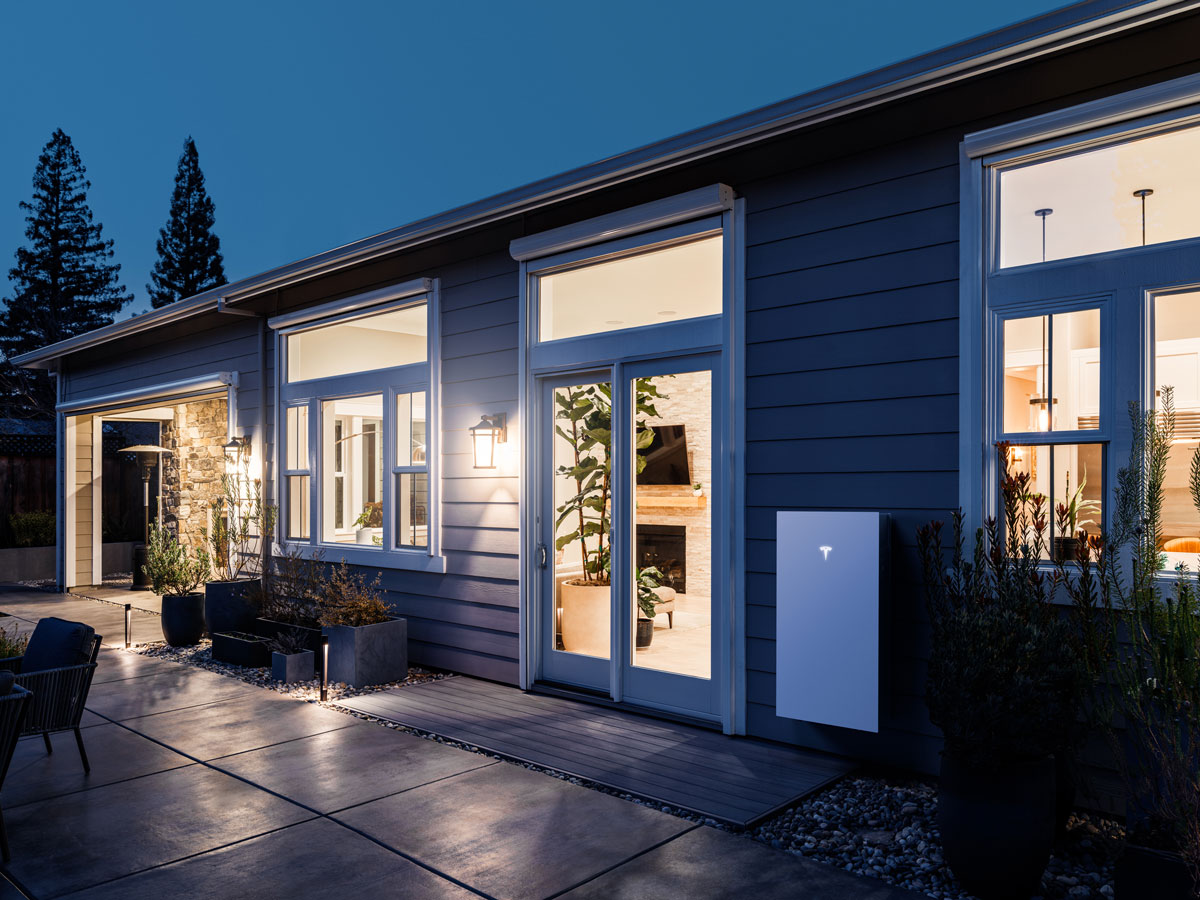
Ultimately, the right backup power system depends on your home's energy needs, budget, and long-term goals.
A generator may be appropriate for homeowners prioritizing a lower initial investment or extended operation with a dependable fuel supply. Battery storage may be especially attractive for those looking to reduce fuel dependence, avoid onsite exhaust, minimize routine maintenance, and integrate renewable energy into their homes.
Rather than focusing solely on what a system costs today, homeowners should consider what it may cost to operate and maintain over the next 10 to 15 years.
When comparing generators and battery storage, the lowest upfront cost doesn't always tell the whole story. Rising fuel expenses, maintenance requirements, air quality concerns, and long-term energy goals can all influence the overall value of a backup power investment. For homeowners seeking a quieter, cleaner, and potentially more self-reliant energy solution, battery storage paired with solar is worth exploring.
At Lightwave, we believe homeowners should feel confident and informed about their energy choices. Our team can help evaluate your household's energy needs and explore solar and battery storage solutions designed around your goals.
Interested in taking greater control of your home's energy? Contact us to schedule a free consultation and learn more about your backup power options.